
Global emerging market investors are sharply cutting back on India, making it the largest underweight market, as funds rotate into China, Hong Kong, and South Korea amid tariff shocks and valuation concerns.

'The quality of justice is directly linked to the quality of judges -- if that suffers, justice delivery suffers.'

Investor sentiment across Asian markets has shifted sharply in August, reveals the latest Bank of America (BofA) Fund Manager Survey, which found global growth expectations retreating after three months of improvement.

India's 25 venture capital and private equity backed "new-age" companies, that listed between May 2020 and June 2025, reveals a sobering reality behind the hype: barely a third have delivered sustained outperformance against the market.

Domestic markets saw the addition of nearly 3 million new dematerialised (demat) accounts in July, marking the highest monthly increase since December 2024. This is also the third consecutive month that witnessed a rise in account openings, following a period of moderation from January to April.

India's initial public offering (IPO) market is rewriting the rules of sectoral dominance, with a diverse slate of companies entering the stock market arena.

After overtaking foreign portfolio investors (FPIs) in market ownership, domestic institutional investors (DIIs) have further solidified their dominance. DII ownership reached a new all-time high of 17.82 per cent as of June 2025, up from 17.62 per cent at the end of March 2025, according to an analysis by Prime Database.

'Sebi's measures are necessary to align the derivatives market with its underlying cash market, as the current disconnect is unsustainable.'
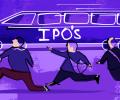
'Listing of scaled Indian subsidiaries of multinational corporations as well as of Indian conglomerates continues to remain a key theme for IPOs in India.'
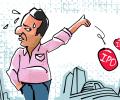
Market watchers link the pullback to underwhelming listing-day performance and the lack of big-name IPOs.
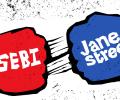
The Jane Street-Sebi saga is more than a legal dispute -- it's a litmus test for India's ambitions as a global financial hub.

If the 'Captain Cool' trademark goes through, it could trigger a wave of similar attempts by celebrities to trademark nicknames given to them by fans.
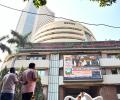
'BSE has facilitated nearly Rs 35 trillion in capital raising across multiple segments.'
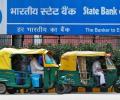
State Bank of India (SBI), the largest lender in the country, has launched a share sale to institutional investors to raise upto Rs 25,000 crore, the biggest qualified institutional placement (QIP) so far by an Indian firm, and has set a floor price of Rs 811.05, which is at a 2.5 per cent discount on Wednesday's closing price.
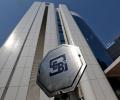
Sebi aims to stay proactive as HFT and quant firms like Citadel Securities, Optiver, Millennium, and IMC Trading are expanding rapidly in India, which is home to the world's largest derivatives market by contracts traded.
The Delhi high court on Friday stayed a Rs 1,140 crore angel tax demand raised by the Income Tax department from hospitality and hotel aggregator Oyo's parent company Oravel Stays Private Limited for the assessment year 2020-21. The tax demand was issued under Section 56(2) (viib) of the Income Tax Act, commonly known as the "angel tax" provision, which applies when unlisted companies issue shares at a value exceeding their "fair" market price.

Experts say the robust filing suggests the second half of the year will see large-scale issuances, provided the markets remain supportive.

Promoters of India's top private listed companies have cut their stakes sharply since 2021, taking advantage of elevated valuations and reshaping ownership dynamics in the market. Holdings of promoters in the top 200 privately owned listed firms declined nearly 600 basis points (bps) to 37 per cent at the end of FY25, from 43 per cent in FY21.

Delhi high court ruling on numbers as trademarks could be a trendsetter.

X calls the home ministry's Sahyog portal a 'censorship portal', stating it usurps judicial functions.
 © 2026 Rediff.com - Advertise with us - Disclaimer - Privacy Policy - Sitemap - Feedback - About us - Terms of use - Grievances